
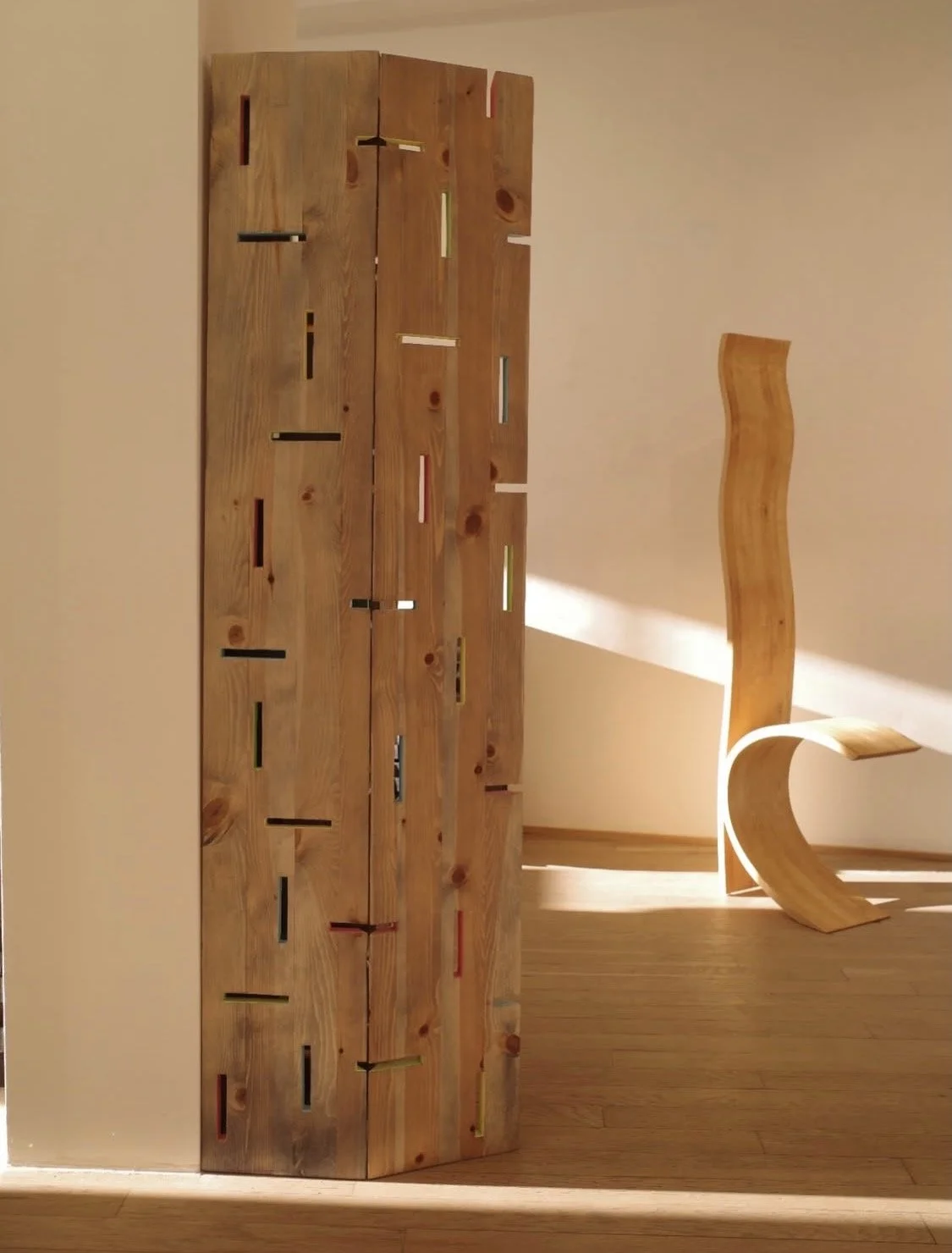
Stein Haanshuus: Following the Grain
October 21- November 14 2026
Stein Haanshuus’s solo exhibition Following the Grain opened this week at Snø Galleri. The title reflects his decades of working with wood: taking the material’s inherent qualities as a starting point, he continually explores new possibilities of material and form, making each work a new experiment.
Born in Oslo in 1949, Haanshuus spent his early years in the city. In 1972, he moved to Røros with a group of friends from Oslo. Together, they established a commune on a mountain farm outside the town. Initially, they had no clear expectations of life in Røros and intended to stay only for a short time.
At the time, Røros yrkesskole, the local vocational school, offered an arts and crafts programme, Kunsthåndverklinje, teaching woodworking, ceramics and other crafts. The programme helped foster a distinctive, somewhat eccentric community among young people in the area. Cultural influences from the American West Coast were arriving in Norway, while the counterculture movement was shaping politics, communal living, agriculture, art and fashion. The community’s life and creative work developed within this broader atmosphere.
After settling in Røros, Haanshuus became interested in the aesthetics of its historic buildings and began working in carpentry, initially mainly to earn a living. His encounter with woodworking was partly a matter of chance, yet it gradually became central to his life and practice. In 1982, he co-founded Flanderborg Treverksted with Niels Noer. In [year to be confirmed], he established his own workshop. Through accumulated experience and ongoing experimentation, his practice developed to bring together the practical functions of objects and the expressive possibilities of wood.
The exhibition presents fifteen works made between 2000 and 2026, using pine and birch, both common in the Røros region. For nearly twenty years, finding new ways to explore the potential of these materials has been a driving force in his work.
In conventional woodworking, trees are sawn into boards, planed smooth, then joined or glued together to make objects. Haanshuus explores other ways of dividing and reassembling wood, opening up new visual possibilities. He splits trunks and boards along their natural grain, revealing the distinctive growth patterns of each tree; breaks timber lengthwise to create surfaces unlike those produced by sawing; and assembles cross-cut sections so that their growth rings form patterns. These techniques often yield unexpected textures and forms, allowing traces of the tree’s growth to become part of the work.
When choosing a term to describe his practice, Haanshuus prefers “woodworker.” For him, it explains what he does more clearly than either “artist” or “craftsperson”: making, shaping and building with wood, whether the result is furniture, a cabinet, a sculpture or another form of artistic expression. His understanding of the material continues to deepen through this sustained process of making and experimentation.